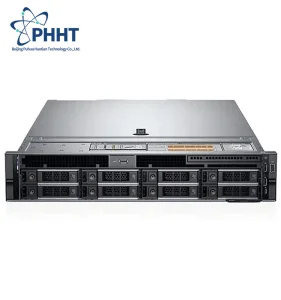
Premium OEM servers, cloud computing systems, and enterprise network switches engineered for peak Business Intelligence performance.
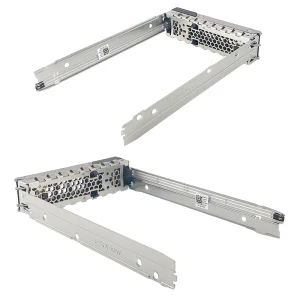
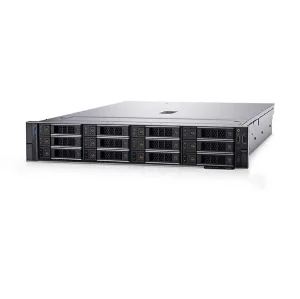

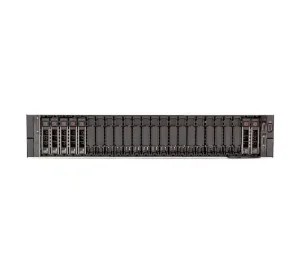
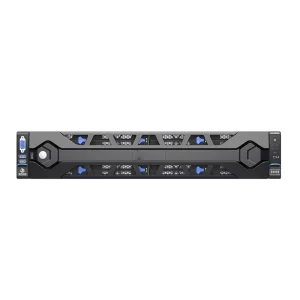
Understanding the shift from analytical software algorithms to highly dense physical processing layers that prevent compute bottlenecks.
Modern Business Intelligence (BI) is no longer confined to static reports and nightly batch processing. In the age of real-time analytics, machine learning, and artificial intelligence, BI has evolved into an active operational engine. This evolution has shifted the computational bottleneck from software logic to physical hardware infrastructure. Organizations require bare-metal agility, high-density AI GPU server virtualization, and ultra-high-bandwidth routing backbones to construct a seamless decision-making matrix.
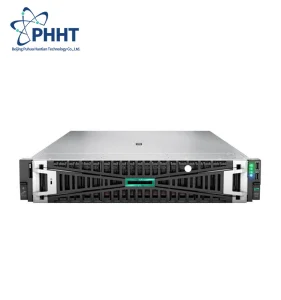
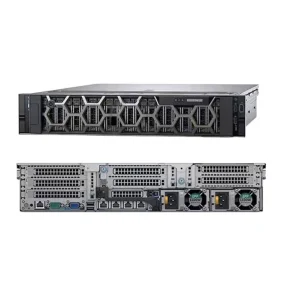
As enterprise databases transition from traditional relational schemas to vector databases and massive data lakes, standard computing units fall short. Complex analytics workloads involve billions of unstructured parameters that must be processed with microsecond latency. To prevent CPU starvation during heavy analytical pipelines, custom OEM/ODM manufacturers have optimized server form factors (such as 2U rack systems) with dual Intel Xeon or AMD EPYC scalable processors, specialized high-capacity hot-swap drive carrier systems, and high-performance PCIe architectures. This allows organizations to build out resource pools capable of scaling dynamically as data volumes grow.
How procurement officers and Chief Technology Officers align infrastructure scaling with enterprise resource budgets.
Global procurers are moving away from monolithic, locked-in server vendors. The modern mandate focuses on Configure-To-Order (CTO) architectures. Organizations require customized hardware, tailored specifically to target workloads—whether optimizing for high-density GPU nodes for deep learning, or high-capacity NAS-driven storage servers.
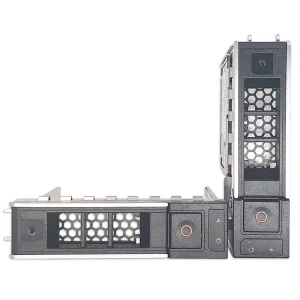
Operational downtime translates directly to financial loss. Sourcing components like hot-swappable HDD caddy trays, dual-redundant power supplies, and high-performance server caddies is essential for maintaining constant uptime. System maintenance must be performed seamlessly without interrupting continuous workflows.
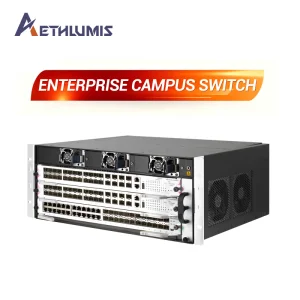
Compute clusters are only as fast as the network connecting them. High-density enterprise networks require Layer 3 core switches supporting OSPF, BGP, and MPLS stackable frameworks. These switches eliminate bottlenecks, ensuring rapid data ingestion and high-speed delivery to computing nodes.
Providing global enterprises with robust manufacturing capability, strict compliance protocols, and agile logistics coordination.
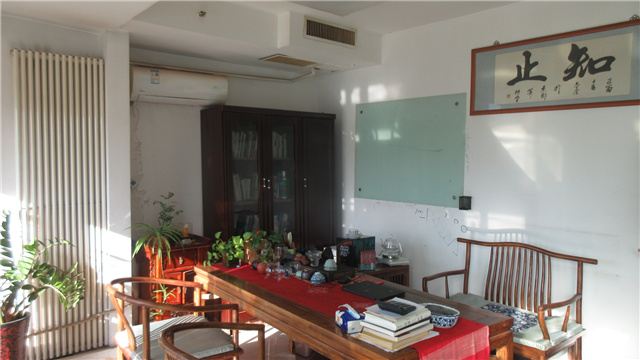
Established in 2003-07-10, and boasting over 21 years of specialized industry experience, our facility has transitioned into a highly advanced Factory 4.0 production ecosystem. We bridge the gap between initial configuration engineering and high-volume, global-scale production. By maintaining robust raw material traceability and a strict 100% inspection quality protocol across all lines, we guarantee that every server chassis, caddy tray, and managed switch operates reliably under extreme, continuous workloads.
Our agile engineering team, comprising graduate-level R&D specialists, works closely with procurement departments globally. Whether processing customized design templates, developing physical server layouts, or adapting localized power supplies, our facility ensures compliance with international quality standards. This responsive approach minimizes transit cycles and provides the high-quality assurance required by brand business partners, engineering enterprises, and wholesale distributors in North America, Eastern Europe, and beyond.
Examining how enterprises deploy scalable backend hardware to power real-time analytics engines.
Modern businesses utilize resource pools driven by dual Intel Xeon systems to host virtualization engines. Partitioning single physical servers into multiple virtual environments maximizes server utilization, decreases hardware footprint, and ensures consistent BI performance.
Deep learning models require high-density computational environments. Utilizing GPU-accelerated rack servers allows organizations to run complex predictive algorithms on large data sets, transforming raw data into actionable forward-looking insights.
Deploying high-speed 48-port stackable Layer 3 switches enables seamless traffic management across multiple server bays. This layout supports OSPF and BGP routing protocols, providing the redundancy needed to prevent data congestion.
Real-world deployment strategies showing how rugged edge terminals connect to central database clusters.
In real-world settings, data collection often occurs outside clean data centers. In agricultural surveying, open-pit mining, deep-sea logistics, and heavy industrial settings, standard equipment is vulnerable to failure due to dust, moisture, and temperature fluctuations. To address this vulnerability, field teams deploy specialized MIL-STD-810H IP65 rugged notebooks equipped with Beidou/GPS modules. These units collect telemetry directly from operational sites and transmit it securely to primary infrastructure databases.
Once data reaches the data center, it is routed through high-throughput PoE switches to target processing clusters. By utilizing hot-swap storage configurations, database administrators can easily replace storage drives without shutting down active analysis queues. This configuration maintains uninterrupted data flows, allowing BI software platforms to deliver real-time dashboards to decision-makers.
Frequently asked questions concerning hardware compatibility, design specifications, and customized order fulfillment.
Real-time Business Intelligence and AI inference require balanced, high-throughput configurations. Essential components include high-density dual-socket processors (such as Intel Xeon Scalable or AMD EPYC families) to manage multi-threaded computing pipelines, a minimum of 64GB DDR4/DDR5 system memory for active databases, and GPU expansion capabilities to support deep learning and predictive modeling. High-speed networking via Layer 3 switches is also critical to minimize data ingestion latencies.
Custom OEM/ODM configurations allow businesses to configure hardware specifically for their primary workloads, avoiding the added cost of unnecessary pre-packaged features. For instance, database-heavy operations can prioritize high-density hot-swap SAS/SATA drive caddies, while virtualization pools can allocate budget toward high-core-count processors and high-capacity RAM modules. This tailored approach optimizes both overall performance and Total Cost of Ownership (TCO).
Layer 3 managed switches handle routing decisions directly at the hardware layer, using advanced routing protocols like OSPF, BGP, and MPLS. This setups routes internal network traffic much faster than Layer 2 switches or software-based routers, preventing data bottlenecks when pulling massive datasets from distributed storage arrays to high-density compute nodes.
Our Factory 4.0 ecosystem uses integrated digital tracking to log every critical component throughout production. Backed by a strict QA/QC team, we run comprehensive physical, thermal, and functional testing on all assembled components. This thorough vetting process ensures that high-stress parts, such as drive carrier bays and server cooling units, meet strict international enterprise reliability standards.
Hot-swap capabilities allow system administrators to replace failing storage components or expand storage capacity while the system remains fully operational. Because enterprise BI databases must provide continuous, round-the-clock insights, taking a system offline to replace a drive creates costly operational downtime. Hot-swap caddies prevent these interruptions, keeping data pipelines online.
Industrial computers, GPU-accelerated computing nodes, and scalable server components built to enterprise standards.
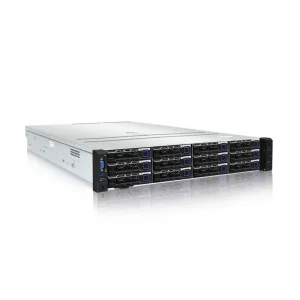

 Nexus AI Server