High-performance processing units engineered for next-generation data centers, virtualization, and intensive enterprise computing workloads.
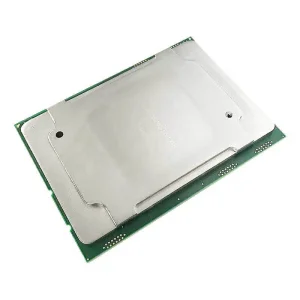
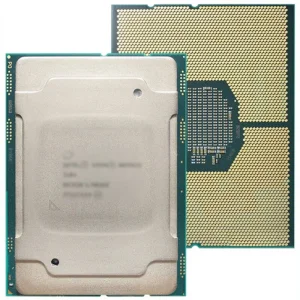
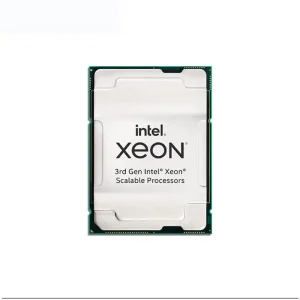
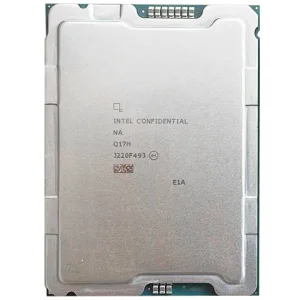
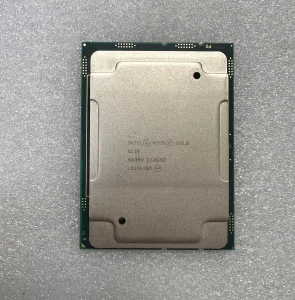
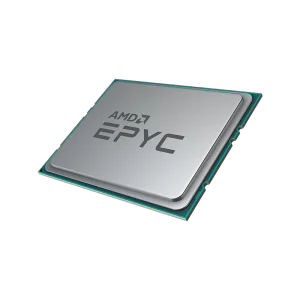
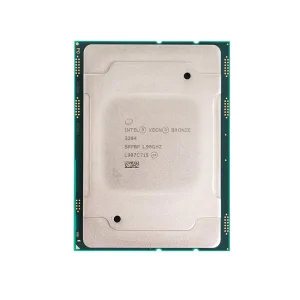
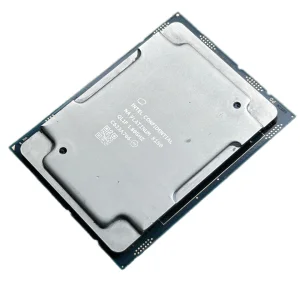
In the era of hyper-scale computing, distributed AI architectures, and complex data-processing requirements, the selection of central processing units (CPUs) has become the cornerstone of infrastructure performance and economic efficiency. The global marketplace for enterprise x86 and ARM server microarchitectures has transitioned from pure clock-speed metrics to complex, workload-specific processing paradigms. Enterprises no longer evaluate processors solely based on nominal core counts; instead, they analyze instruction-set efficiency, thermal design power (TDP) constraints, memory bandwidth scaling, and integrated hardware acceleration capabilities.
As premier CPU exporters and distributors, our analytical focus centers on alignment with the evolving hardware landscape. Standard multi-tenant environments, hybrid clouds, and edge computing nodes demand highly tailored computing solutions. Modern architectures, such as the Intel Xeon Scalable and AMD EPYC families, represent this technological shift. By integrating specialized hardware units directly onto the silicon die (e.g., Intel Advanced Matrix Extensions (AMX) or AMD's 3D V-Cache), manufacturers now deliver exponential gains for AI inference, high-performance computing (HPC), and cryptography, without correspondingly inflating power footprints.
This microarchitectural optimization translates directly to lower Total Cost of Ownership (TCO) for data centers. In standard configurations, migrating from legacy 2nd Generation Xeon processors to 4th or 5th Generation architectures enables consolidation ratios of up to 3:1. This dramatically reduces required rack space, cooling overhead, and licensing costs. Consequently, global trade channels for enterprise silicon have evolved beyond simple logistics; they demand deep technical alignment, engineering support, and rigorous supply chain management to guarantee that hardware matches specific application demands.
The trajectory of enterprise processor design is governed by the physical limits of silicon fabrication and the increasing requirements of data throughput. The transition from monolithic dies to multi-die architectures (chiplets) has redefined manufacturing yield profiles and scalability. Understanding these architectural details is essential for IT directors and procurement managers who wish to future-proof their compute systems.
Double the I/O throughput of prior generations. High-speed lanes enable fast communication with NVMe arrays, enterprise GPUs, and NICs, eliminating system-wide storage and networking bottlenecks.
Support for CXL 1.1 and 2.0 establishes unified memory spaces across CPUs, accelerators, and memory expanders. This significantly improves utilization and lowers cost overhead in dense clusters.
Intel Software Guard Extensions (SGX) and AMD Secure Encrypted Virtualization (SEV) provide hardware-enforced isolation. Secure multi-tenant cloud deployments are protected at the silicon level.
Looking toward the future, the integration of 3nm process nodes and co-packaged optics will continue to reduce power consumption while scaling core counts past 128 cores per socket. This structural shift highlights the importance of reliable sourcing. Selecting verified CPUs with validated stepping revisions ensures stability, mitigates microcode vulnerabilities, and guarantees long-term BIOS compatibility across multi-generation server motherboards.
Modern computing environments are highly varied, requiring optimized hardware configurations for specific regional deployment models. Generic configurations often fall short of meeting localized performance, thermal, and regulatory requirements. Below are the key scenarios where customized CPU selection plays a vital role:
Deployments in smart manufacturing and robotics—such as the integration of quadruped robotic platforms—require low-latency computation directly at the machine interface. In these scenarios, compact processing units with native matrix instruction support execute inference algorithms on-device. This minimizes data transmission latency to central servers, enabling real-time motion control and spatial navigation.
Cloud service providers rely on high core-density and advanced memory bandwidth to maximize VM allocation ratios. Utilizing chips like the Intel Xeon Gold 6326 or high-core AMD EPYC variants allows operators to run dense containerized environments. Hardware-level security features like secure paging and virtualization-level isolation prevent side-channel attacks across different user accounts.
At the municipality level, edge data hubs process high-volume sensor streams, traffic analytics, and local communications. Our high-efficiency switches, combined with mid-tier Xeon Silver and Gold processors, provide the balanced computational capacity needed to manage high network loads while staying within standard power limits.
The global semiconductor supply chain requires strong coordination between component manufacturers, test centers, and distributors. Our operations, based in major manufacturing hubs in China, leverage local logistics networks, component availability, and technical expertise to keep supply lines moving smoothly.
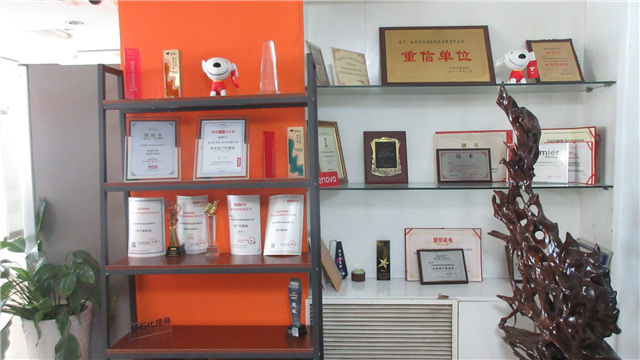
With 21 years of industry experience, we have built a dependable ecosystem of OEM partners, system integrators, and testing laboratories. This structure allows us to secure hard-to-find CPU allocations, manage stepping revisions, and provide customized system building to our global clients.
Our logistics infrastructure is designed to reduce export cycle times. We verify every SKU prior to dispatch, maintaining a continuous supply chain for our partners in Eastern Europe, North America, and domestic markets. This reduces downtime and helps project managers keep their deployments on schedule.
Industrial computing requires high hardware reliability. A single component failure can lead to significant database downtime, data corruption, or service interruptions. To mitigate these risks, we enforce strict quality control protocols across all phases of product handling.
Every CPU, storage drive, and network switch undergoes testing under simulation profiles that mimic high-stress data center conditions. Our engineering team checks thermal dissipation, electrical current profiles, and data parity over long testing windows.
Furthermore, we maintain 100% traceability on all sourced batches. This tracking allows our clients to verify the production origins of their silicon, helping prevent the inclusion of unauthorized or re-marked components in critical systems.
Answers to common industry queries regarding enterprise silicon procurement, stepping configurations, and integration parameters.
Complementary networking components, storage devices, and intelligent systems for modern computing environments.
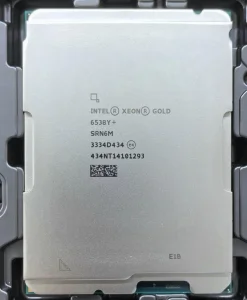

 Nexus AI Server