Unlocking architectural flexibility, customized thermal design, and granular firmware optimization for standard-setting data center matrices.
In the era of hyper-scale computing, distributed AI architectures, and complex hybrid cloud networks, storage is no longer just a passive node. Standard commercial-off-the-shelf (COTS) hard drives often fall short of meeting the rigorous operational margins required by modern enterprise architectures. As a premier custom OEM hard drive supplier, we bridge this operational gap by engineering tailored storage media (HDDs & SSDs) built to survive heavy, multi-tenant read-write cycles, challenging thermal environments, and persistent latency requirements.
OEM customization goes far beyond label placement. It involves deep physical design, logic-board firmware recalibration, protocol optimizations (such as SAS, SATA, and NVMe pathways), and extensive compliance checking. System integrators, cloud service providers (CSPs), and major telecommunications enterprises require storage hardware that integrates cleanly with their hyperconverged platforms without causing hardware translation layer latency.
Research indicates that customized firmware adjustments can improve Mean Time Between Failures (MTBF) by up to 25% under steady-state write stress. Our OEM hard drive designs prioritize thermal dissipation and vibration tolerance, keeping array stability high even in high-density 4U 102-bay chassis environments.
By analyzing deep workloads—ranging from active file storage in AI pipeline ingestion to cold archive arrays—we help customers select the correct technologies (such as Conventional Magnetic Recording (CMR), Shingled Magnetic Recording (SMR), or high-density TLC/QLC flash architectures). This level of design support ensures your raw data systems align perfectly with your hardware budgets.
Decoupling the primary technical and economic indicators that drive procurement decisions for high-volume storage arrays.
Datacenters operate 24/7/365. Standard desktop drives fail quickly under these high duty cycles. Our enterprise-grade OEM drives are built to support persistent write workloads of up to 550TB per year for HDDs, and multiple Drive Writes Per Day (DWPD) for flash arrays, protecting critical transaction logs and database indexes.
A primary concern for procurement officers is drive dropouts caused by RAID controller incompatibilities or custom OS timeouts. We offer custom BIOS and firmware tuning, aligning timeout periods (CCTL/TLER) with standard hardware configurations like LSI/Broadcom controllers, Dell PowerEdge, HPE ProLiant, and Lenovo ThinkSystem servers.
In high-density rack configurations, the vibrations from dozens of high-RPM drives and cooling fans can degrade drive performance. Our OEM solutions integrate Rotational Vibration (RV) sensors and advanced dampening elements to stabilize performance across complex Multi-Drive configurations.
Leveraging the robust manufacturing clusters of mainland China to deliver reliable storage solutions to global markets.
China continues to be the global center for high-tech component manufacturing and assembly. By maintaining close partnerships with primary raw material providers, semiconductor test houses, and high-precision mechanical component plants in key manufacturing zones, we streamline the assembly process and keep lead times short. Our customers benefit from a resilient, highly responsive ecosystem that quickly adapts to shifting component availability and design needs.
Material traceability is a central pillar of our quality control process. Every disk platter, spindle motor, magnetic head assembly, and flash chip is tracked from its source. This ensures that every finished drive meets our strict standards for durability, consistency, and reliability before leaving the facility.
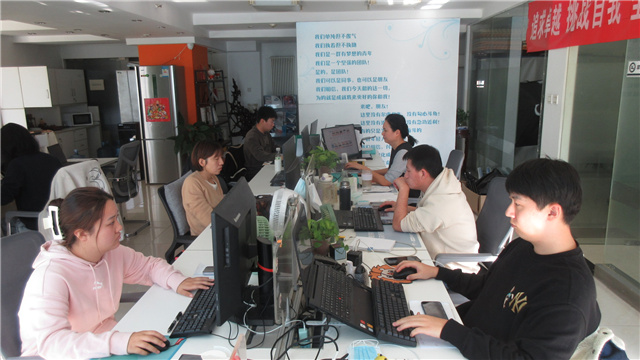
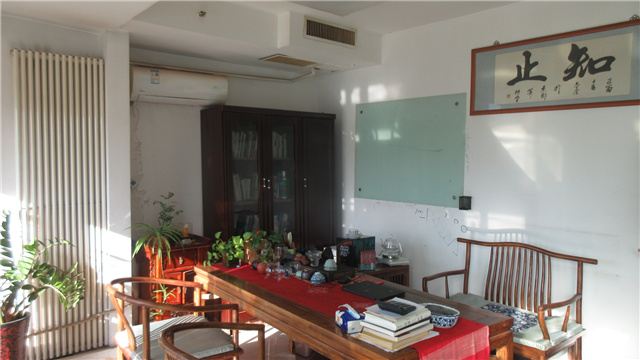
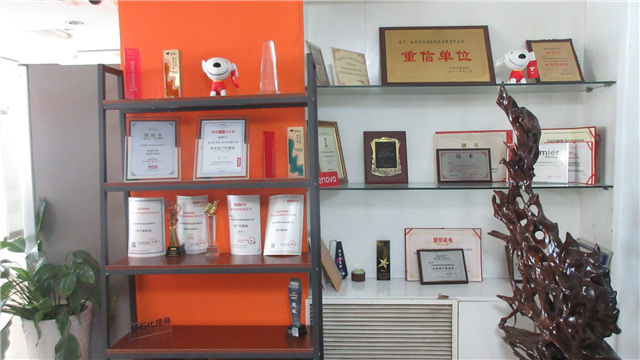
Our specialized facilities focus on precise R&D testing, customized firmware programming, and comprehensive unit validation.
Protecting your data assets with industry-leading encryption protocols and strict regulatory compliance.
To support corporate security mandates, our OEM drives offer support for Self-Encrypting Drive (SED) standards, TCG Opal protocols, and Instant Secure Erase (ISE). These capabilities allow rapid, cryptographic data sanitization during decommissioning or reallocation, preventing unauthorized data recovery.
We ensure that our storage products comply with major global environmental and trade certifications, including RoHS, WEEE, CE, FCC, and UL. This simplifies integration into international products and helps your finished server chassis glide through customs and global trade checks.
To guard against supply chain vulnerabilities, we offer optional hardware-level write protection and customized firmware signatures. This ensures that only verified, cryptographically signed firmware can be loaded onto the drive, blocking malicious actors from tampering with drive controller code.
Understanding where custom storage media fits within modern industrial networks and enterprise edge architectures.
High-volume transactional systems require low write latency and long-term write endurance. Our custom OEM drives provide optimized response curves for database engines running in rackmount environments, preventing bottlenecks during peak business hours.
AI modeling demands massive write pipelines and high sequential read throughput. By tuning storage buffer allocations and command queuing logic, our OEM drives help ingest pipelines feed GPU nodes smoothly, preventing costly idle times.
Multi-channel NVR arrays must handle steady, non-stop sequential write operations under a wide range of temperatures. Our surveillance-focused firmware adjustments ensure zero frame loss, even during continuous recording in variable outdoor enclosures.
Looking ahead at the key technological shifts shaping the next generation of high-density storage solutions.
The enterprise storage landscape is changing rapidly. As mechanical hard drives transition toward technologies like Heat-Assisted Magnetic Recording (HAMR) and Microwave-Assisted Magnetic Recording (MAMR), storage density continues to climb. These advancements require incredibly precise tracking mechanisms and specialized controller firmware to handle data track spacing that is measured in single-digit nanometers.
At the same time, high-performance solid-state drives are adopting PCIe Gen 5 and Gen 6 interfaces, bringing massive increases in raw throughput. Our engineering team closely follows these evolving standards, developing next-generation drives that support advanced interfaces like CXL (Compute Express Link) and NVMe-oF (NVMe over Fabrics) to meet the needs of tomorrow's datacenters.
While Shingled Magnetic Recording (SMR) increases storage density, it requires host-side management to avoid write bottlenecks. Our R&D team works closely with software engineers to write custom, host-managed storage APIs that maximize capacity while keeping performance stable.
Operational data demonstrating our deep history, manufacturing capabilities, and strict quality control standards.
| Corporate Overview |
Company Registration Date2003-07-10
Years in Industry21 Years
Years Exporting2 Years
Floor Space (Testing & R&D Lab)120 ㎡
|
| Quality Control Matrix |
Raw Material Traceability SupportYes, Fully Certified
Product Inspection MethodInspection of 100% of products
Line-level Quality AuditingYes, Active on all lines
QA/QC Dedicated Inspectors1 Specialized QA Engineer
|
| R&D Resources & Customization |
Customization OptionsSample processing, Graphic processing, Customized on demand
R&D Engineers3 Engineers
Engineer Education Levels3 Graduate Degrees
Accepted LanguagesEnglish
|
| Global Markets & Demographics |
Main Market Share DistributionDomestic Market (50%), Eastern Europe (20%), North America (15%), Others (15%)
Target ClientsBrand businesses, Retailers, Engineering firms, Wholesalers, Manufacturers
|
Answers to common technical, logistics, and customization questions from enterprise procurement teams.
We can customize error recovery limits (such as TLER/CCTL), read/write buffer allocations, power-up states, acoustic profiles, thermal management thresholds, and physical identity strings (vendor ID/product ID) to ensure smooth integration with your proprietary storage platforms.
We perform 100% surface scan testing and read/write validation on every single drive, rather than relying on batch sampling. Additionally, our raw materials are fully traceable, and our manufacturing facilities undergo routine internal audits to ensure consistent build quality.
Yes. Our engineering team can create customized testing procedures to simulate specific workloads, thermal ranges, and vibration levels, ensuring the drives perform reliably under your exact operating conditions.
We offer flexible warranty support structured around standard replacement units (RMA offset allocations) shipped with your orders, or through localized depot replacement options, minimizing downtime for critical systems.
 Nexus AI Server