Enterprise-grade network components, high-density servers, and managed PoE solutions deployed globally.
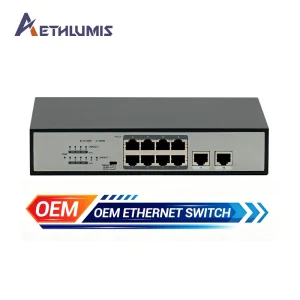
The global telecommunications hardware market is undergoing a structural paradigm shift. No longer limited to transmission lines and standard L2 switching, the modern telecommunications landscape operates at the convergence of ultra-broadband connectivity, hybrid cloud storage, and localized AI computing nodes. According to major industrial reports, the expansion of 5G Non-Standalone (NSA) and Standalone (SA) architectures has forced enterprise and carrier datacenters to completely redesign their transport layers.
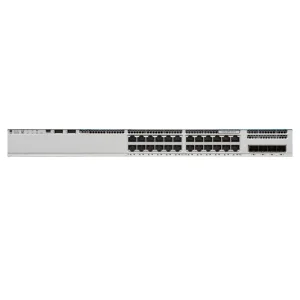
As a result, modern telecom equipment suppliers are required to offer highly cohesive ecosystems. This includes not only high-density switches like the Catalyst 9200 Series C9200L-48P-4G-E and industrial PoE hardware built to withstand environmental surges, but also deep computational servers capable of processing AI inference directly at the edge. The commercial reality is that physical topology and server performance must be treated as a single, co-optimized utility. Modern procurement strategies are transitioning away from fragmented sourcing, focusing instead on integrated systems that combine network layer resiliency with massive local throughput.
Several structural macro trends are driving the adoption of specialized telecommunications and server hardware:
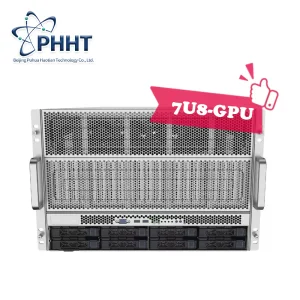
Traditional CPUs are no longer sufficient to process high-throughput telemetric datasets. Servers like the AMD EPYC with 8 GPU are critical for processing AI workloads, training localized LLMs, and powering cloud visualization directly inside carrier hubs.
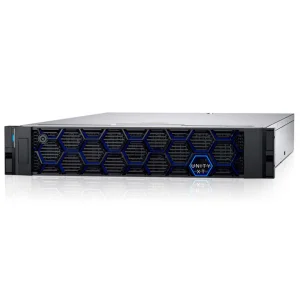
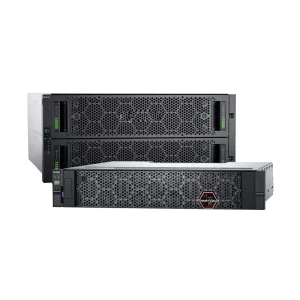
Hybrid storage setups combining NVMe SSDs with high-capacity SAS hard disks (such as the ME5012 Storage Array) are replacing legacy structures. SFP28 interfaces allow these storage arrays to communicate at 25 GbE speeds directly to the switches.
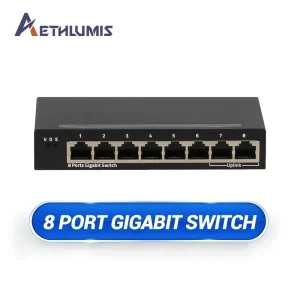
Edge IoT terminals must remain active under extreme conditions. Modern network nodes deploy 8 Port Gigabit PoE Switches with 6KV Lightning Protection to ensure maximum uptime in harsh environments.
To understand why carrier-grade equipment is necessary, we must analyze its performance across various field operations. The deployment of network equipment is highly dependent on environmental and structural scenarios:
In manufacturing plants, electromagnetic interference (EMI) and power surges can easily damage consumer-grade networking gear. Deploying a fanless metal case unmanaged switch alongside Industrial Quality 8 Port Gigabit PoE Switches provides the physical resilience needed to run robotic arms, camera sensors, and industrial automation networks smoothly. High-voltage surge protection ensures operations continue uninterrupted even during power fluctuations.
Simultaneously, edge compute servers run local machine vision algorithms to scan for defects on the assembly line in real-time, sending localized metadata back to the central data center.
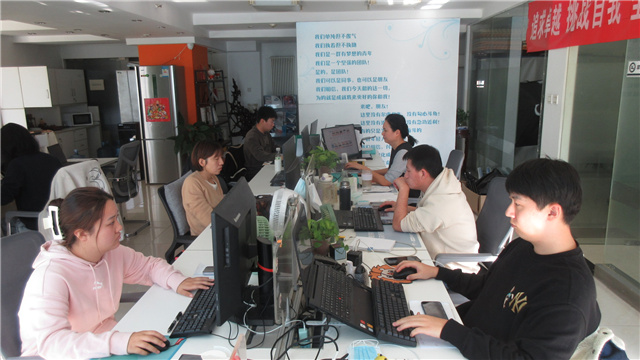
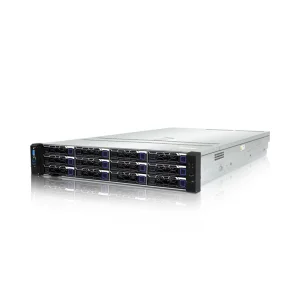
Modern media agencies, animation houses, and VFX studios require low latency and high bandwidth to handle multi-terabyte raw assets. System integrators combine Enterprise 2U GPU Rendering Rack Servers with high-performance storage servers, ensuring that artists can render complex fluid dynamics, 3D simulations, and high-frame-rate visual effects directly in real-time without experiencing system lag.
High-throughput data storage arrays with 10GbE / 25GbE connectivity serve as the media scratch disks, allowing multiple high-performance workstations to access assets concurrently without bottlenecking the local area network.
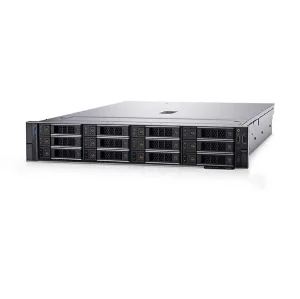
Hyperscale data centers require flexible virtualization hosting solutions. Using enterprise-grade systems like the HPE ProLiant DL380 / DL360 Gen11 and EMC PowerEdge R750/R760/R770, hosting providers can quickly deploy hundreds of virtual machines (VMs) for database management, CRM hosting, and cloud service distribution.
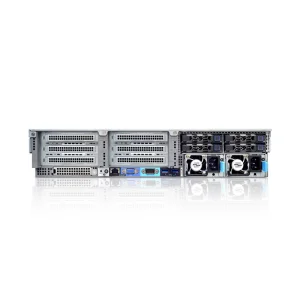
The high density of PCIe slots in these servers makes them perfect for adding SFP network cards, hardware crypto-accelerators, and multiple solid-state storage arrays. This setup ensures that network throughput remains consistent even under peak traffic demands.
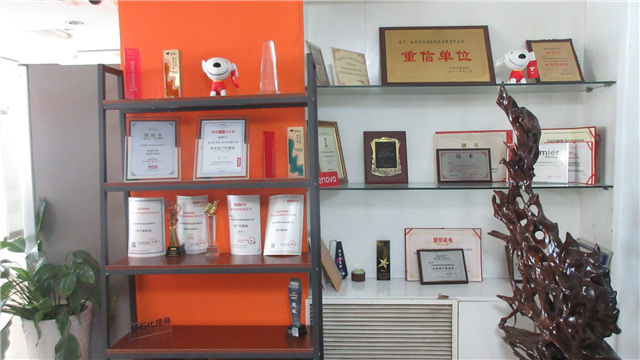
The trajectory of telecommunications architecture is moving toward software-defined systems, zero-trust network access, and highly localized edge storage solutions. As fiber-to-the-home (FTTH) and industrial 5G networks become standard, enterprise local-area networks must upgrade to prevent bottlenecking the incoming high-speed external connections.
Over the next 5 to 10 years, the industry will focus on several key developments:
With the transition to IEEE 802.3bt (Type 4) standards, PoE switches are moving beyond delivering 30W of power, with new designs capable of outputting up to 90W per port. This allows the network to power not just small security cameras, but also complex edge computers, point-of-sale systems, and high-throughput wireless access points directly over a single Ethernet cable.
As thermal design power (TDP) for modern CPUs and GPUs exceeds 350-400W, traditional air cooling is reaching its physical limits. Next-generation server enclosures are designed to support direct-to-chip liquid cooling plates and immersive cooling tanks. This ensures that multi-GPU clusters can run high-performance AI models and rendering tasks continuously without thermal throttling.
Using NVMe over Fabrics (NVMe-oF), storage arrays can communicate with compute servers at microsecond latencies. This design bridges the performance gap between local storage speeds and SAN arrays, allowing virtualized servers to dynamically scale their storage capacity on demand without sacrificing I/O performance.
A review of our industrial capacity, quality control procedures, and global export infrastructure.
| Operational Dimension | Production Capability & Metrics | Quality Assurance & Compliance Protocols |
|---|---|---|
| Company Registration & Experience | Registered on 2003-07-10. Over 21 years of experience in telecommunications. | Maintains complete traceability records for all raw materials, from silicon wafers to metal chassis components. |
| Global Export Logistics | Active global exporter for 2+ years, focusing on North America (15%), Eastern Europe (20%), and domestic markets (50%). | Compliant with regional telecommunications and emissions standards across North America and the EU. |
| R&D Team & Technical Capabilities | 3 R&D Engineers with graduate-level degrees, specializing in custom request processing and custom-on-demand designs. | Offers customization services for client-specific software modifications and custom physical mounting setups. |
| Quality Control (QC) Protocols | 1 dedicated QA/QC inspector conducting rigorous testing across all active production lines. | 100% Product Inspection: Every network switch, storage rack, and server node undergoes a full diagnostic test before leaving the factory. |
| Target Customer Profiles | Provides systems for brand businesses, retailers, engineering contractors, wholesalers, manufacturers, and private operators. | Delivers flexible customization, whether you need enterprise-level deployment systems or specific individual nodes. |
Answers to common industry questions regarding network architectures, server installations, and power over Ethernet standards.
Unmanaged switches (such as our 8 Port Gigabit Unmanaged Switch) operate as simple plug-and-play devices that require no manual configuration, making them ideal for simple networks. Managed switches, on the other hand, support features like VLAN creation, LACP link aggregation, IGMP snooping, and detailed SNMP monitoring, giving administrators full control over local network traffic routing and security.
Industrial settings are highly susceptible to voltage spikes from lightning strikes, heavy machinery operations, and power surges. Integrated 6KV lightning protection diverts high-voltage surges safely to the ground, preventing damage to the switch's internal circuits and protecting connected PoE equipment like outdoor IP cameras and wireless terminals.
SFP28 ports support high-bandwidth 25 GbE network connections. Compared to older 10 GbE SFP+ ports, SFP28 uses an updated single-channel physical layer design to deliver 2.5 times the network speed. This is crucial for high-density storage arrays processing large files, virtual machine storage, or heavy database workloads.
Yes, most multi-GPU racks (like our 2U and 7U servers) use standard 19-inch mounting dimensions. However, deployment requires checking the server's depth (often 800mm to 1000mm) and power supply capacity. High-density GPU configurations may need dual 2000W redundant power supplies (CRPS) and dedicated high-voltage power distribution units (PDUs) to run safely under load.
Verifying the source of raw materials ensures that critical components like capacitors, power modules, and silicon chipsets meet strict tolerance standards. This raw material testing, combined with testing every unit before it leaves the factory, helps minimize hardware failure rates and ensures long-term operational stability for industrial deployments.
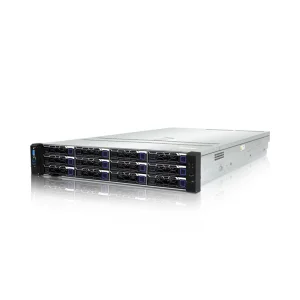
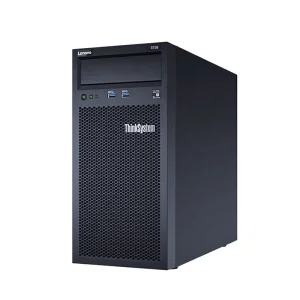
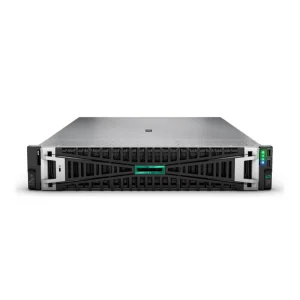
Scalable GPU systems and storage units designed for high-density datacenters and media rendering clusters.
 Nexus AI Server