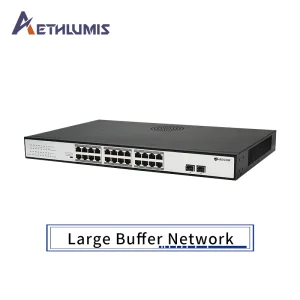
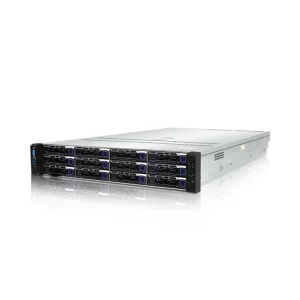
Optimized for high-density local processing, low latency networking, and operational resiliency in Ghana's evolving digital landscape.

Ghana's commercial sector is undergoing an unprecedented digital shift. Initiated by the government's "Digital Ghana Agenda," public administrations, financial institutes in Accra, and production hubs in Tema are migrating rapidly to high-density cloud networks. Traditional multi-tier datacenter architectures—comprising separate physical servers, complex storage area networks (SANs), and complex fiber switches—are proving too capital-intensive, energy-draining, and difficult to manage under local environmental conditions.
This is where Hyperconverged Infrastructure (HCI) emerges as the definitive solution. By software-defining computing, virtualization, storage, and Layer-3 switching into unified x86 or ARM server arrays, HCI enables enterprises in Kumasi, Takoradi, and Accra to dramatically reduce energy costs, footprint size, and maintenance workloads. For Ghanaian enterprises seeking local data compliance and low-latency response times, importing advanced HCI systems from leading global manufacturers has transitioned from an operational option to a core strategic mandate.
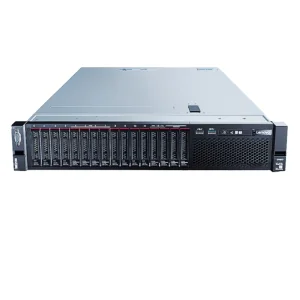
HCI integrates CPU, RAM, and high-performance NVMe storage within a single 1U/2U server node, completely eliminating the complexity of external storage networks.
Hosting local servers instead of public cloud data centers in Europe cuts down latency from ~150ms to under 5ms, crucial for local financial transactions.
Ghana's energy tariffs demand optimized hardware. HCI reduces space and cooling demands by up to 50% compared to legacy multi-tier networks.
How leading business sectors leverage HCI hardware configurations to drive uptime, performance, and legal compliance.
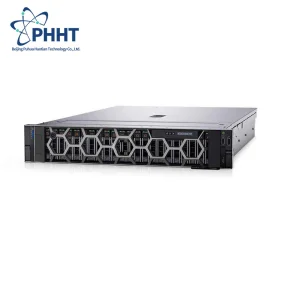
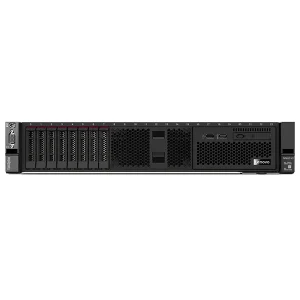
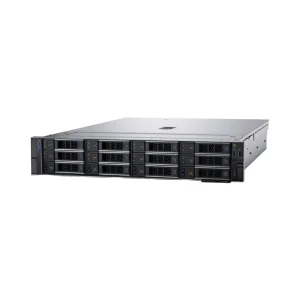
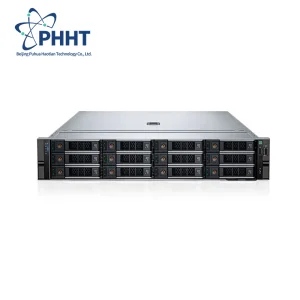
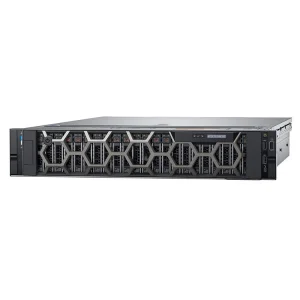
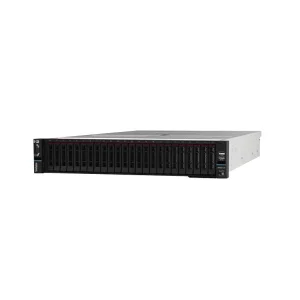
The Bank of Ghana (BoG) enforces strict guidelines concerning operational resilience and customer data privacy. FinTech companies processing payments, mobile money transfers, and savings databases rely on redundant, clustered HCI configurations using high-efficiency enterprise servers. High-performance dual-processor platforms, like the R760 or SR650 series running virtualized VSAN arrays, guarantee zero data loss and automated failover capabilities.
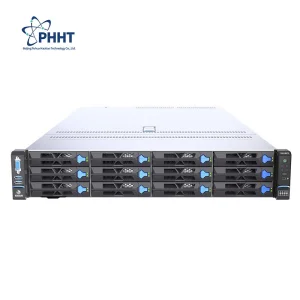
Mining operations face dust, extreme temperatures, and limited bandwidth connection to capital offices. Localized edge computing nodes powered by robust 2U rack servers process local geological and machinery telemetry data locally. The high vibration tolerance and redundant hardware setups ensure the continuous flow of information, regardless of remote locations.
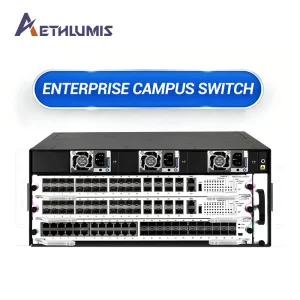
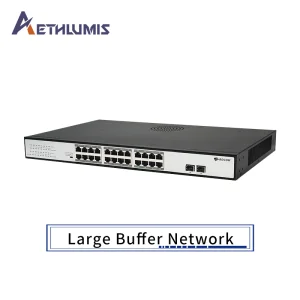
Ghana's top academic institutions and public administrative frameworks demand secure, high-density environments. Stackable L3 Core switches paired with multi-socket GPU-enabled server architectures allow these entities to scale up their cloud capacity on-demand, handling big-data research, e-government systems, and public records secure backups.
Aligning with the Google Search Quality Rater Guidelines, we showcase complete transparency, experience, and authority in data center hardware manufacturing.
Since our establishment in 2003, our production facility has continuously refined its output to serve high-demand global markets, including Eastern Europe, North America, and regional telecom nodes in West Africa. We understand that network uptime in Ghana is non-negotiable. That is why we mandate a 100% product inspection protocol across all server, PoE, and L3 switch assembly lines. Every raw component—from power transformers to memory ICs—is fully traceable, ensuring consistent long-term thermal resistance, low electrical leakage, and high network stability.
Procuring server arrays and enterprise-grade switches directly from our China-based facility presents substantial advantages for Ghanaian system integrators, government departments, and IT wholesalers:

To help IT Decision Makers (ITDMs) calculate their Total Cost of Ownership (TCO), the table below highlights the differences between legacy datacenter hardware configurations and modern Hyperconverged Infrastructure (HCI) in typical West African environments:
| Feature Parameter | Traditional Datacenter Architecture | Hyperconverged Infrastructure (HCI) | Specific Advantage for Ghana Operations |
|---|---|---|---|
| Hardware Footprint | Separate servers, dedicated SAN switches, disk storage shelves. | Unified 1U/2U multi-node chassis. | Conserves rack space, lowers facility rent in prime Accra districts. |
| Power Consumption | High energy draw across multiple discrete devices and fans. | Consolidated power supply unit (PSU) configurations (370W - 1600W). | Significantly reduces operational monthly power costs and heat load. |
| Fault Tolerance | Complex configurations; manual failovers are prone to configuration drift. | Automated software-defined virtual SAN replication. | Resists network dropouts and minimizes downtime. |
| Network Interface | Split Ethernet and Fiber Channel protocols. | Layer 3 high-speed fiber backplanes (OSPF, BGP, MPLS). | Simplifies switching, allowing fast local data packet routing. |
| Scaling Method | Requires purchasing separate storage devices and host machines. | Scales out linearly by adding another single node. | Highly predictable CAPEX cycles for growing enterprises. |
Get in touch with our graduate engineering team today to customize server specs, network switch layouts, and obtain custom project pricing.
Send Inquiry NowAs virtualization and AI technologies continue to mature, several key hardware trends are defining procurement decisions across Ghana:
1. AI and GPU Acceleration at the Edge: Enterprise applications no longer just process basic database records. Modern logistics, security, and financial applications utilize localized AI models (e.g., LLM inference, facial recognition) running on high-density GPU servers. Systems like the Lenovo ThinkSystem SR650 and high-efficiency AMD EPYC server nodes are increasingly requested for edge processing roles.
2. Compliance with NITA & National Data Protection: The National Information Technology Agency (NITA) of Ghana is tightening regulatory oversight on data hosting locations. Systems running locally within Accra, Kumasi, or Takoradi prevent the export of critical data over international links, aligning directly with Act 843 of the Ghana Data Protection Act.
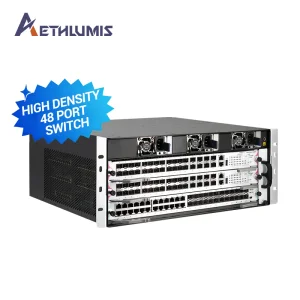
3. Switch Redundancy and High-Power PoE Devices: The deployment of IoT systems, smart city infrastructure, and VoIP networks has generated a high demand for 24-Port and 48-Port Power over Ethernet (PoE) switches capable of delivering up to 370W of power. Choosing switches with dual power supply configurations ensures network resiliency during local power supply fluctuations.
Detailed technical, logistical, and compliance answers for IT directors, purchasers, and system developers in Ghana.
Explore our full catalog of high-capacity managed switches, robust cloud-rendering server hosts, and industrial-grade network components.
Talk directly with our China manufacturing hub export coordinators.
 Nexus AI Server