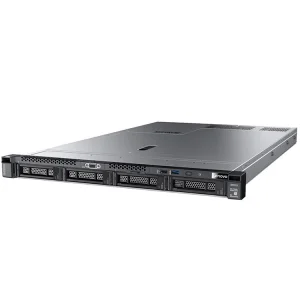
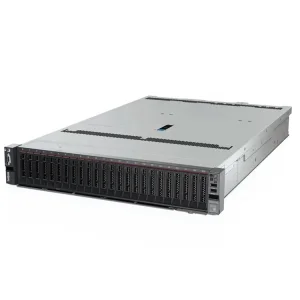
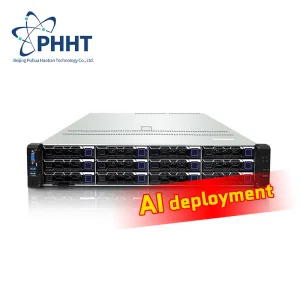
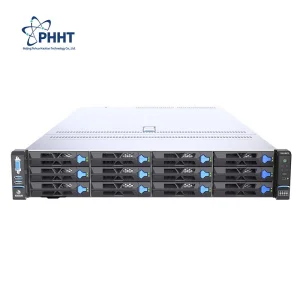
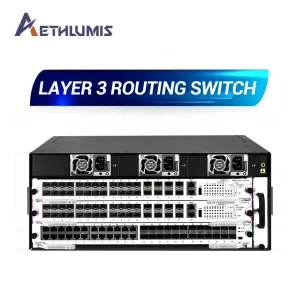
Explore our production-ready high-density computing platforms, core network switches, and custom client devices for critical enterprise deployment.
Analyzing industrial demand, computational capacity limits, and structural changes in high-density computing networks.
The contemporary enterprise landscape is undergoing an unprecedented shift. Artificial intelligence, large-scale deep learning models, retrieval-augmented generation (RAG) pipelines, and hyper-converged cloud virtualization require specialized computing power that traditional CPU architectures cannot provide. High-density Graphics Processing Units (GPUs) have shifted from specialized acceleration boards to the core computational engine of modern enterprise data centers. Global organizations now treat GPU computational capacity not just as a hardware asset, but as a critical strategic utility.
To support these scaling workloads, procurement teams must look past general-use components to evaluate raw system capabilities: high-density PCIe Gen 5 interconnects, custom power distribution units (PDUs), and efficient thermal management designs. As compute demands double every few months, enterprise systems require bespoke hardware optimization. Global sourcing managers are shifting their strategy from off-the-shelf systems to customizable OEM/ODM GPU platforms that align with specific software pipelines, thermal infrastructure constraints, and targeted total cost of ownership (TCO) profiles.
Information Gain Perspective: General-use servers often suffer from structural bottlenecks, such as mismatched PCIe lane configurations or insufficient cooling configurations. Custom OEM/ODM design allows enterprises to align hardware layouts with their specific software profiles, avoiding thermal throttling and maximizing system efficiency.
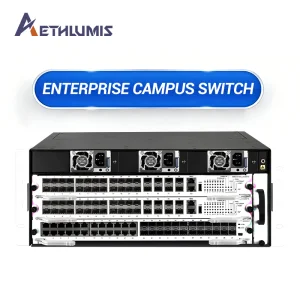
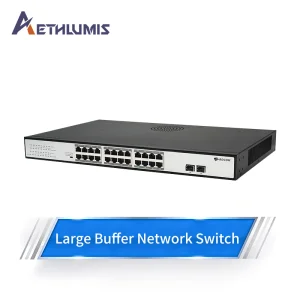
From a network perspective, high-capacity computing clusters cannot run in isolation. A cluster of multi-GPU servers requires high-speed, low-latency switching networks. If the network fabric cannot handle the data transfer rates between nodes during distributed training or high-concurrency inference, even the fastest GPUs will sit idle. Integrating high-performance L3 managed core switches—supporting up to 1.47Tbps switching capacity, OSPF, BGP, and MPLS stacking—ensures that compute nodes operate at maximum efficiency, preventing packet loss and eliminating processing bottlenecks.
Why Chinese specialized fabrication centers offer significant lead time and architectural optimization advantages.
The manufacturing of advanced multi-GPU systems and enterprise rack structures is a complex process. It requires high precision and deep coordination across the entire supply chain. Our production facilities, drawing on over 21 years of industrial engineering experience, leverage a highly integrated ecosystem of component suppliers, printed circuit board (PCB) fabricators, and specialized assembly lines. This concentration of resources minimizes lead times, ensures stable component sourcing, and allows us to rapidly adapt designs to new technologies.
By keeping core R&D, fabrication, assembly, and testing in close proximity, we accelerate the engineering feedback loop. When configuring custom systems—whether that involves modifying PCIe riser cards for low-latency lanes, optimizing VRM placement for higher power stability, or designing custom cooling shrouds—our engineering team can quickly turn drafts into functional, tested prototypes. This integration keeps projects on schedule and protects global clients from supply chain disruptions.
We work directly with engineering clients to design high-performance compute layouts. This includes custom server layouts, optimized cooling systems, and specialized board layouts that fit cleanly into standard enterprise rack environments.
Our production facilities utilize modern surface-mount lines to manufacture dense multi-layer PCBs. This high-density routing is essential to support the signal integrity required by PCIe Gen 5 and Gen 6 interfaces without data corruption.
Every server, networking node, and consumer laptop undergoes complete testing under full computational load. This validation process screens out component failures early and ensures stable operation when deployed in production centers.
Where our specialized rackmount units and high-throughput switching gear are utilized to resolve performance constraints.
Enterprise hardware must be optimized for its intended workload. General-purpose servers often fall short when handling modern database tasks, virtualization layers, or heavy machine learning models. Identifying and resolving these bottlenecks is critical to maximizing return on hardware investments. Below are the key scenarios where customized OEM/ODM systems deliver significant advantages over standard off-the-shelf configurations:
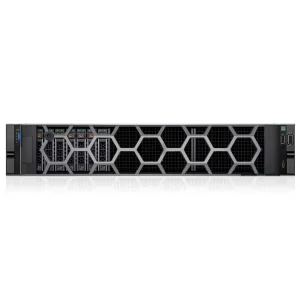
Large language models and complex computer vision systems require continuous matrix multiplication. Standard compute nodes can struggle with power delivery and thermal load under these workloads. Specialized GPU servers—configured with high-wattage, redundant power supplies (80 Plus Platinum/Titanium) and heavy-duty, hot-swappable cooling fans—run continuously at peak performance. By utilizing custom PCIe structures, these systems minimize latency between host processors and accelerators, speeding up training cycles and increasing inference throughput.
Modern data centers rely on virtualization to maximize hardware utilization. Running multiple virtual machines (VMs) or containerized microservices requires high-speed access to memory and storage pools. Servers configured with dual Intel Xeon or AMD EPYC processors, matched with high-density DDR5 memory slots and NVMe storage backplanes, handle high virtual machine density with ease. These systems integrate directly with storage area networks (SAN) and network-attached storage (NAS) to keep application response times low under high database loads.
Data centers need fast, reliable networks to keep compute clusters fed with data. Layer 3 managed core switches, supporting up to 1.47Tbps switching capacity, handle heavy traffic between storage pools and compute nodes without dropping packets. By running advanced routing protocols like OSPF and BGP directly on the switch hardware, network administrators can build resilient, redundant topologies that reroute traffic around link failures instantly. This prevents network bottlenecks from idling expensive GPU resources.
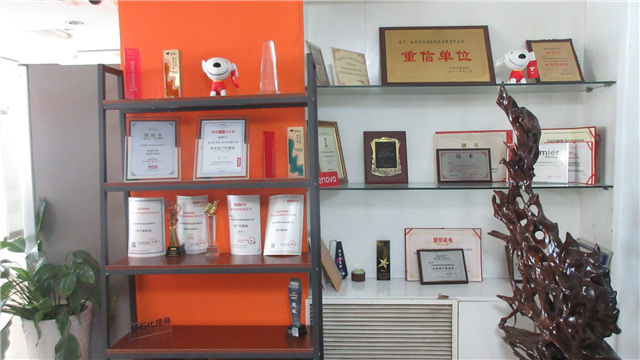
Verified factory capabilities, quality control protocols, and global market reach metrics.
| Operational Metric | Verified Manufacturing Profile & Capability Details |
|---|---|
| Company Registration Date | Established on 2003-07-10 (Over 21 years of design & manufacturing experience) |
| Design & Prototyping HQ | 120 ㎡ specialized technology layout and testing center |
| R&D Team & Credentials | 3 specialized graduate R&D engineers focusing on custom system architectures |
| Quality Control Standards | 100% inspection on all production runs; full raw material traceability systems in place |
| Key Sourcing Markets | Domestic Market (50%), Eastern Europe (20%), North America (15%), Rest of World (15%) |
| Accepted Sourcing Languages | Professional English support for technical specifications, API integration, and logistics |
| Customization Options | Sample processing, graphic processing, custom chassis/motherboard layout on-demand |
| Key Customer Profiles | Brand businesses, enterprise engineers, system integrators, wholesalers, and hardware manufacturers |
Key considerations for CTOs and procurement directors navigating hardware lifecycles and infrastructure integration.
Building out compute infrastructure requires balancing current project requirements with future scaling needs. Sourcing managers must evaluate how new hardware fits into their existing space, power, and cooling configurations. For example, deploying high-TDP GPU servers into legacy data center racks can lead to unexpected power supply overloads or thermal throttling. When choosing custom systems, procurement teams should look for modular architectures that allow for straightforward power, cooling, and network upgrades down the line.
As cooling demands rise, data centers are shifting toward advanced liquid cooling systems to handle high-wattage configurations efficiently. Transitioning to hybrid air-liquid or full liquid-to-air cooling options helps maintain lower operating temperatures, which extends component lifespans and reduces cooling costs. Additionally, selecting systems with redundant, hot-swappable power supplies and fans helps minimize unplanned downtime, keeping critical enterprise applications online.
EEAT Sourcing Recommendation: Before finalizing any system designs, ensure your hardware provider offers detailed quality assurance documentation. This should include full component traceability records, thermal simulation reports, and detailed power consumption data at peak workloads.
Network integration is another critical factor. Connecting high-performance compute nodes back to storage networks requires careful planning of port speeds and routing protocols. Utilizing managed Layer 3 switches with robust OSPF, BGP, and stackable configuration options allows network teams to build low-latency, self-healing topologies. This design prevents network bottlenecks from slowing down computational workloads and ensures consistent application performance.
Answers to common engineering and procurement questions regarding custom hardware, quality control, and deployment.
We offer comprehensive OEM/ODM customization options to fit specific deployment needs. This includes structural adjustments to 1U, 2U, or 4U rackmount chassis, custom layout design for high-performance motherboards, optimization of internal airflow and fan configurations, and specific custom BIOS configurations to prioritize stability or throughput. We also configure power distribution systems to match various data center voltage inputs, ensuring seamless installation and operation.
Every system we manufacture undergoes a rigorous inspection protocol prior to shipping. This testing regimen includes component-level verification, automated optical inspection (AOI) on PCB lines, and full power-on testing under high compute loads for 24 to 72 hours. We monitor system temperatures, voltage stability, and data throughput during these runs to identify and address any potential component issues, ensuring only verified hardware leaves the facility.
Raw material traceability allows us to track every critical component—such as high-density capacitors, power management ICs, and high-speed connectors—back to its original manufacturing batch. This traceability is essential for maintaining consistent quality. If a component supplier reports a batch anomaly, we can immediately identify which production runs are affected, perform targeted corrections, and ensure the reliability of the finished systems.
High-performance computing clusters generate massive data traffic between nodes. Layer 3 managed core switches route this traffic dynamically using protocols like OSPF and BGP, processing packets directly on dedicated hardware. This hardware-level routing reduces latency and prevents network congestion. Features like stackable configuration and redundant power supplies ensure that network performance remains stable, even during peak data transfers.
Our typical development cycle spans 4 to 8 weeks, depending on the complexity of the customization. The process begins with an in-depth review of customer requirements and system architecture, followed by PCB design and CAD modeling of the chassis. Once these designs are approved, we fabricate and assemble prototypes for rigorous testing. After the prototype successfully completes all validation stages, we initiate full-scale production runs.
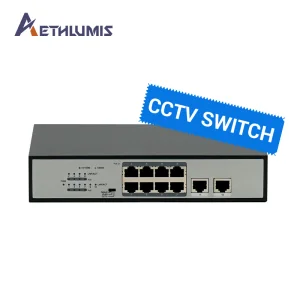
Access our full catalog of high-density rack servers, unmanaged PoE switches, Layer 3 networks, and consumer-facing client platforms.
 Nexus AI Server