In the age of AI computing, Edge networking, and hybrid cloud infrastructures, the network switch has evolved from a simple box forwarding packets into the critical neurological backbone of enterprise operations.
Modern IT ecosystems are under unprecedented stress. The exponential increase in data generated by IoT devices, the transition of enterprise applications to multi-cloud environments, and the rigorous processing demands of machine learning models mean that network throughput, latency, and reliability are no longer merely technical specifications—they are core business indicators. This whitepaper provides a comprehensive review of the Top 10 Network Switch Manufacturers shaping today's enterprise and industrial connectivity, while exploring how supply chain adaptation, specifically China's Factory 4.0 infrastructure, is redefining efficiency, quality control, and localized customization options.
As network architects shift from traditional Layer 2 environments to software-defined Layer 3 network topologies (incorporating complex routing protocols like OSPF, BGP, and MPLS), selection criteria have expanded beyond brand recognition. Buying decision makers now demand deep insight into a manufacturer's hardware engineering capacity, software development cycles, raw material security, and OEM flexibility.
To assist CTOs, network infrastructure leads, and procurement managers in identifying the best manufacturing partners, we analyze the top ten global network switch vendors based on hardware innovation, software capabilities, market share, and enterprise adoption.
Cisco remains the dominant force in enterprise switching. Known for its comprehensive Catalyst campus switch series and high-performance Nexus data center switches, Cisco provides unparalleled enterprise ecosystem integration. Their switch architecture heavily integrates proprietary Silicon One ASICs, offering optimized performance for multi-cloud networking and high-density environments. The primary advantage of Cisco is the breadth of their software ecosystem, including Cisco DNA (Digital Network Architecture) and Cisco ACI (Application Centric Infrastructure).
Arista revolutionized the cloud-scale networking space with its Extensible Operating System (EOS), a single binary software image running across its entire product line. Arista switches are highly favored by hyperscalers, financial institutions, and high-frequency trading firms due to their ultra-low latency profiles, open API capabilities, and deep telemetric monitoring. Arista is currently leading the transition to 800G Ethernet platforms designed to support AI training and machine learning clusters.
Huawei stands as a dominant networking vendor globally, particularly across Asia, Europe, Africa, and Latin America. Its CloudEngine series provides highly robust solutions for both data centers and campus networks. Known for outstanding hardware durability, cost efficiency, and research-driven innovations, Huawei switches support advanced SDN capabilities, extensive Layer 3 routing features, and energy-saving technological improvements built into their custom chassis designs.
Acquired by HPE, Juniper is renowned for its Junos OS operating system, which is highly respected by network engineers for its routing engine and CLI. Juniper’s EX (campus) and QFX (data center) switches leverage Mist AI integration. Mist uses machine learning to proactively detect, diagnose, and resolve network anomalies before users experience downtime, making Juniper a top choice for organizations seeking automated, self-healing network solutions.
HPE Aruba is a major competitor in campus, branch, and edge deployment scenarios. The Aruba CX switching portfolio offers cloud-native architecture with built-in Network Analytics Engine (NAE) for real-time monitoring and troubleshooting. Aruba’s emphasis on secure, automated edge-to-cloud connectivity has secured its place in mid-to-large enterprise networks, particularly where seamless wireless and wired integration is a top priority.
H3C is a highly significant competitor in the enterprise computing and networking market. Delivering an extensive range of high-performance switches from the edge to the data center core, H3C provides excellent price-to-performance metrics, advanced software virtualization (IRF), and comprehensive support for open networking standards. Their hardware, such as the UniServer and S-series switches, is engineered for reliable, large-scale deployment across public sectors and commercial enterprises.
Extreme Networks has carved out a robust niche in cloud-managed campus networking. By focusing on simplifying network administration through its ExtremeCloud IQ management platform, the company delivers end-to-end visibility, automated fabric deployment, and secure network access control. Their switches are highly valued in healthcare, higher education, and government agencies where administrative efficiency is key.
Dell has positioned its PowerSwitch line as a leader in the "Open Networking" paradigm. Rather than locking customers into proprietary software, Dell supports third-party operating systems such as SONiC (Software for Open Networking in the Cloud) and ONIE (Open Network Install Environment). This open architectural model allows enterprises to disaggregate their hardware and software, reducing license locking and optimizing costs.
Netgear is the primary manufacturer for Small and Medium-Sized Businesses (SMBs) and has recently become the dominant hardware vendor for Pro AV (Audio-Visual) over IP installations. Their M4250 and M4300 managed switch series are pre-configured out-of-the-box for AV protocols like Dante, NDI, and AVB, greatly simplifying the integration of audio, video, and control systems over standard IP networks.
At the foundation of global network infrastructure are ODM/OEM custom manufacturing partners. These highly agile factories, predominantly based in technology hubs like Shenzhen and Ningbo, provide white-label switch hardware designed to meet strict client specifications. Offering custom PCB layouts, private-label casings, variable PoE budgets, and localized firmware configurations, these factories empower brand-name companies, system integrators, and large-scale industrial projects to deploy high-reliability network hardware at optimized unit economics.
Modern network switch manufacturing has shifted away from simple assembly toward high-precision automated manufacturing plants implementing Industry 4.0 methodologies.
In the current geopolitical and macroeconomic climate, supply chain resiliency is the most critical metric for enterprise procurement. Leading factories in China, including those established for over two decades (such as our facility, founded in 2003 with 21 years of specialized industry experience), have integrated intelligent automated processes. These Factory 4.0 principles ensure that hardware is built to survive extreme operating conditions while maintaining rapid delivery cycles.
This edge is built on three core pillars:
To demonstrate how a modern OEM partner operates, study our capability specifications showing our structured control and industry integration:
| Operational Metric | Specification / Capability Details |
|---|---|
| Company Registration Date | Established 2003-07-10 (21 Years of Specialized Industry Experience) |
| Main Target Markets | Domestic Market (50%), Eastern Europe (20%), North America (15%), Others (15%) |
| Primary Customer Profiles | Brand Businesses, Retailers, Systems Engineers, Wholesalers, Manufacturers |
| Quality Control Standards | 100% Inspection on all production lines with dedicated QA/QC inspectors |
| Material Traceability | Full component-level traceability of raw materials enabled |
| R&D & Engineering Capacity | Graduate-level engineering team with custom sample & graphic processing |
Enterprise networks require a balanced mix of access, aggregation, and core switching layers. Selecting the incorrect architecture can result in bottlenecks, packet loss during high-traffic intervals, and hardware failures under load. Here are the key technical concepts procurement officers must evaluate:
When deploying IP cameras, VoIP systems, or Wi-Fi 6/7 Access Points, the PoE switch power budget is vital. Standard 802.3af offers up to 15.4W per port, while 802.3at (PoE+) provides up to 30W. Higher-end models support 802.3bt (up to 60W or 90W per port).
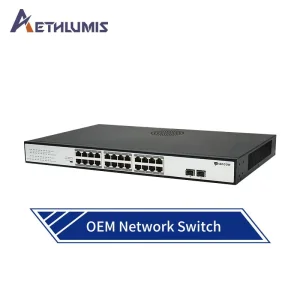
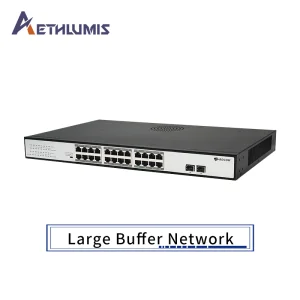
Purchasing agents must check the total system power budget. For example, a 24-Port PoE Switch with a 370W total capacity can supply full PoE+ (30W) to only 12 ports simultaneously. Reliable manufacturers include large buffer capacities and intelligent power allocation firmware to prevent port brownouts.
Layer 2 switches operate at the Data Link layer, forwarding traffic based on MAC addresses. This is suitable for edge switches connecting end-user devices. However, routing traffic between VLANs requires Layer 3 switches.
Layer 3 core switches handle routing at the Network layer using hardware-based IP routing. Advanced enterprise core switches feature massive switching capacities (up to 1.47Tbps) and support carrier-grade routing protocols (OSPF, BGP, MPLS) to ensure seamless inter-subnet communication without routing bottlenecks.
Local network bottlenecks frequently occur at the connection point between access switches and core switches. A high-quality access switch must feature dedicated SFP or SFP+ fiber uplinks separate from standard RJ45 copper ports.
Having dual SFP+ 10Gbps uplinks allows engineers to establish link aggregation groups (LAG), doubling uplink bandwidth to 20Gbps while introducing critical redundancy. If one fiber link fails, the switch dynamically reroutes traffic via the secondary link, preventing campus-wide outages.
Different industrial verticals and office layouts impose radically different hardware demands. Understanding these localized application scenarios ensures that selected network switches match the environments they operate in.
| Industry Verticals | Deployment Environment | Critical Hardware Needs | Recommended Solution Profile |
|---|---|---|---|
| Enterprise Offices | Main Distribution Frame (MDF) or Intermediate Frame (IDF) closets | High port density, low noise fans, high PoE power budget for IP phones and wireless access points | 24 or 48-port Gigabit PoE+ switches with SFP fiber uplinks |
| AI Workstations & Data Centers | Controlled-temperature server racks alongside high-density GPU nodes | Ultra-high switching capacity (1.47Tbps+), low latency forwarding, high-speed SFP28/QSFP28 ports | Managed Layer 3 Core switches with redundant power supplies |
| Industrial / IoT Systems | Factory floors, outdoor enclosures, smart city monitoring hubs | VLAN isolation, extreme temperature tolerance, surge protection, din-rail mounting option | Ruggedized 8-Port PoE switches with built-in VLAN isolation modes |
| Smart Classrooms / Retail | Branch offices, storage rooms, wall-mount enclosures | Plug-and-play ease, unmanaged setup, fanless design for quiet spaces | Unmanaged Gigabit switches with auto-negotiating PoE ports |
We pride ourselves on maintaining open, transparent operational statistics to build trust with global buyers. Our production lines combine decades of manufacturing experience with flexible customization models to meet demanding specifications.
Read our technical FAQs designed to clarify complex hardware engineering questions for network designers and purchasing agents.
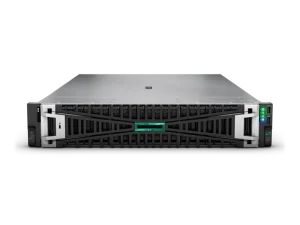
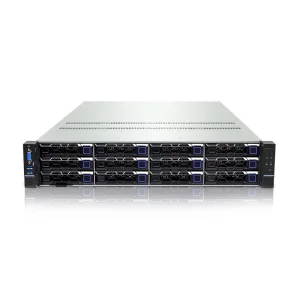
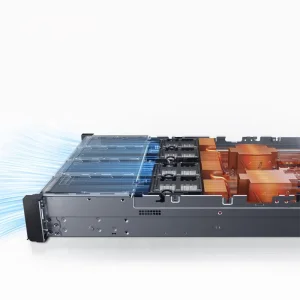
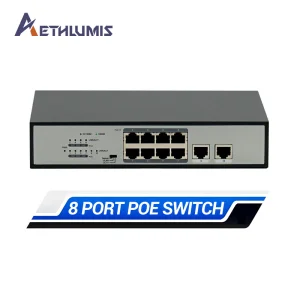
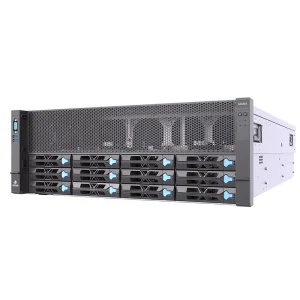
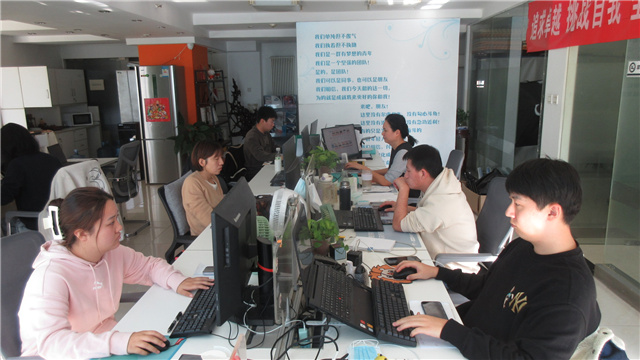
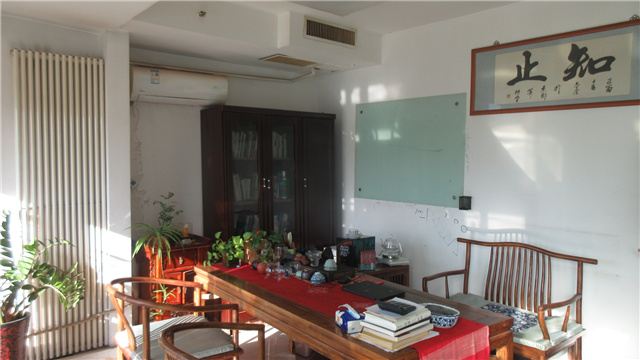
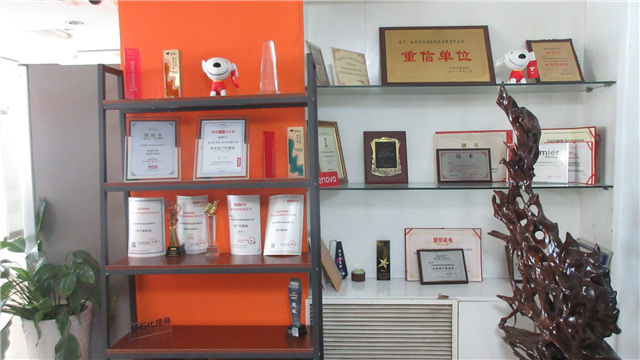
Take a closer look inside our operational environment, designed to manage high-precision assembly, detailed performance verification, and systematic quality assurance.
 Nexus AI Server